
National Identification...
April 29, 2024

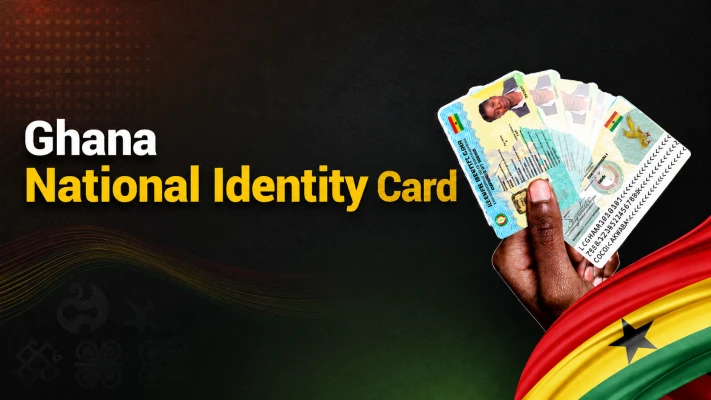
Ghana’s National Identity Card, commonly known today as the Ghana Card, is more than a plastic identification document.
It represents the country’s long effort to create a reliable system for proving identity, citizenship, residence, and accessing public and private services.
The card is issued by the National Identification Authority (NIA) to Ghanaian citizens living in Ghana and abroad, as well as eligible foreign nationals who are legally and permanently resident in Ghana.
The idea of a national identity system in Ghana dates back several decades. In 1973, national identity cards were issued to citizens in some border regions, including the Volta Region, Northern Region, Upper East and Upper West, Brong Ahafo, and parts of the Western Region.
However, the project was discontinued three years later because of financial and logistical challenges. In 1987, the Provisional National Defence Council revisited the idea through the National Commission for Democracy, but economic difficulties again slowed progress.
The subject returned strongly in 2001 during the National Economic Dialogue, where a national identification system was recognised as an important policy need for Ghana’s development.
A more formal foundation was laid in the early 2000s. By 2003, the National Identification Secretariat had been set up to help implement and manage Ghana’s National Identification System.
This was followed by the National Identification Authority Act, 2006 (Act 707), which established the NIA as the official body responsible for creating, maintaining, issuing, and promoting the use of national identity cards in Ghana.
The National Identity Register Act, 2008 (Act 750), and later amendments, provided the legal basis for the registration system, the identity register, and the issuing of national identity cards.
The early implementation of the Ghana Card came with major administrative and technical demands. Pilot registration exercises were held in Abokobi and Sege in the Greater Accra Region to test the forms, equipment, and registration process.
Mass registration later began in the Central Region on July 1, 2008, before expanding to other regions, including the Western, Eastern, and Volta Regions. These early exercises showed both the importance and the difficulty of building a national identity system for millions of people across the country.
Over time, the Ghana Card evolved from a simple identity document into a biometric and digital identity tool. The modern National Identification System uses unique biometric identifiers, including fingerprints, iris data, and facial dimensions, to help create unique identities and assign personal identification numbers to registered individuals.
According to the NIA, the system is designed to support accurate identity verification and the storage of personal information for eligible Ghanaians and permanent resident foreigners.
The Ghana Card also became important because Ghana needed a more trusted way to connect citizens and residents to essential services.
The NIA states that the card helps people prove their identity and citizenship and supports access to services such as health, education, communication, insurance, banking, passports, driver’s licences, and land registration.
This makes the Ghana Card central to daily life, not only as a means of identification, but also as a bridge between people and the formal systems that serve them.
The legal framework around the card also gives it national importance. Under the National Identity Register Act, a national identity card is issued to a person whose personal information has been entered into the National Identity Register.
The Act also states that an issued national identity card remains the property of the Republic and is valid for ten years from the date of issue, subject to re-issue.
One major lesson from the Ghana Card’s history is that national identification is not only about technology. It is also about trust, inclusion, security, and public administration. Ghana’s early attempts struggled because of funding, logistics, and implementation challenges.
Later reforms focused on stronger laws, biometric registration, improved card security, and wider public use. The card has since become part of Ghana’s broader digitalisation story, helping the state and institutions verify identity more consistently.
Today, Ghana’s National Identity Card stands as one of the country’s most significant public identity tools. Its history reflects Ghana’s long journey from early paper-based identification efforts to a modern biometric system linked to national development.
As the Ghana Card continues to support public services, financial access, travel, communication, and official transactions, it remains an important symbol of citizenship, identity, and Ghana’s move toward a more connected society.
April 29, 2024