
Ghana Vs England at the 2026...
June 24, 2026

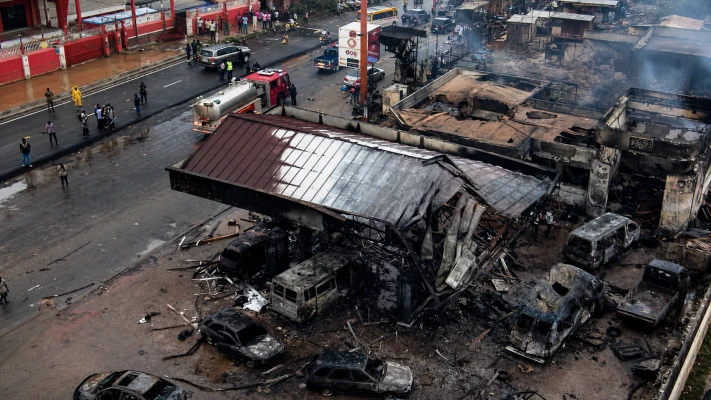
On June 3, 2015, Accra was hit by one of the most painful tragedies in Ghana’s recent history. After hours of heavy rainfall, parts of the city were overwhelmed by severe flooding, leaving commuters, traders, residents, and workers stranded.
Many people sought shelter at the GOIL filling station near the Kwame Nkrumah Circle Interchange, hoping to escape the floodwaters and wait for safety. What began as a flood emergency soon turned into a national disaster when fuel caught fire in the floodwaters, leading to a deadly explosion and blaze.
The incident became known as the “June 3rd Twin Disaster” because it involved both catastrophic flooding and a devastating fire.
The tragedy claimed 150 lives and injured many others, leaving families, communities, and the nation in deep mourning. Many of the victims were ordinary people caught in a moment of fear and confusion; people trying to get home, protect themselves from the rain, or find temporary shelter.
The scale of the loss made June 3rd more than just a disaster date; it became a painful reminder of the human cost of poor drainage, unsafe urban development, weak emergency systems, and the dangers of fuel stations operating in flood-prone areas.
For Accra, the disaster exposed long-standing challenges in city planning and flood management. Choked drains, building on waterways, inadequate waste disposal, and limited flood-control systems had all contributed to the city’s repeated flooding problems.
The June 3rd tragedy showed how quickly these problems could become deadly when combined with fire, fuel, traffic congestion, and a lack of safe escape routes. It also raised serious questions about public safety, emergency preparedness, and how Ghanaian cities can protect people during extreme weather events.
Beyond the statistics, the June 3rd Twin Disaster remains a story of families who never saw their loved ones return home. It is a story of parents, children, workers, traders, drivers, passengers, and bystanders whose lives were suddenly cut short.
Each anniversary brings back memories of grief, survival, and national reflection. For many Ghanaians, the disaster is remembered not only for the destruction it caused but for the emotional wound it left behind.
Today, remembering June 3rd is an act of honour and responsibility. It honours the 159 lives lost, the injured survivors, and the families who continue to carry the pain of that night.
It also reminds Ghana to keep demanding safer cities, better drainage systems, responsible waste management, stronger regulation of high-risk locations, and faster emergency response.
The June 3rd Twin Disaster should never be treated as only a past event. It remains a warning, a lesson, and a call to protect human life before the next heavy rain falls.
June 24, 2026

June 18, 2026
June 10, 2026
June 3, 2026
March 6, 2026
February 5, 2026
January 7, 2026
January 2, 2026
December 18, 2025
December 11, 2025