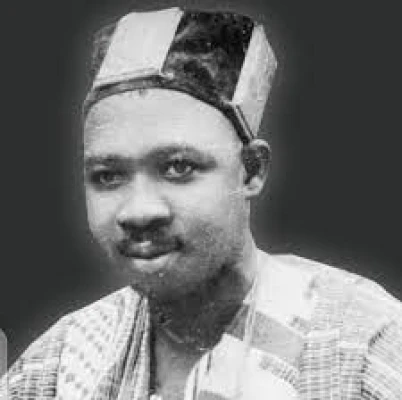

The Life and Journey of Gospel...
September 14, 2026

Joseph Adam Braimah (1916–1987), also known as Kabuchewura Joseph Adam Braimah, holds a unique place in Ghana’s political history as the first person from the Northern Territories to become both a Member of Parliament and a Cabinet Minister in 1951, breaking a colonial barrier that had long excluded the North from high national office.
Born on 31 August 1916 in Kpembe (now in the Savannah Region), he grew up in a region where the British deliberately limited formal education, viewing the North mainly as a labour reserve and fearing that an educated northern elite would challenge traditional authority and colonial control.
His educational path was therefore exceptional: after early schooling in Tamale and Salaga, he attended Achimota College and later Fourah Bay College in Sierra Leone, experiences that exposed him to a broader West African intellectual and political environment and shaped his commitment to northern inclusion in national decision‑making.
In the late 1940s, as nationalist agitation intensified in the south, Braimah emerged as one of the few northern voices engaging with constitutional reforms. In 1950, he was among the first three northerners appointed to the Legislative Council in Accra, alongside Mumuni Bawumia and S. D. Dombo.
Following the 1951 elections under the Coussey Constitution, he was elected to represent Gonja East and, in the same year, was appointed by Kwame Nkrumah as Minister for Communications and Works, making him not only the first northern MP but also the first northern Cabinet minister in the Gold Coast, with responsibility for critical infrastructure at a time when roads, communications, and public works were central to national development.
Braimah’s career was not without controversy. In November 1953, he resigned from government after admitting he had accepted £2,000 from Aksor Kasardjian, an Armenian contractor operating in the North, to support his election expenses.
An official commission of inquiry investigated and published evidence against him, leading to his exit from the executive. The “Braimah affair” caused shock in the North, where many already suspicious of southern politics felt betrayed that one of their own had been “corrupted” by a foreign contractor, while the scandal also highlighted the lack of clear rules on campaign financing and the vulnerability of new politicians in a rapidly changing system.
The combination of this scandal, perceived neglect of the North (including failure to extend the railway), and mistrust of the Convention People’s Party contributed to the formation of a distinctly northern political platform. In April 1954, Braimah, together with S. D. Dombo, Mumuni Bawumia, Tolon Naa Yakubu Tali, Adam Amandi, Naa Abeifaa Karbo, Imoru Salifu, and C. K. Tedam, founded the Northern People’s Party (NPP), whose primary aim was to champion northern interests within the approaching independence settlement by advocating for equitable development, education, and infrastructure.
In March 1955, the party endorsed federalism as a way to protect northern autonomy within a future independent Ghana, reflecting deep concerns about domination by the more developed south; although the NPP later merged into the United Party tradition, Braimah’s role as a founding figure cemented his place in the lineage of northern political leadership.
Braimah served as MP for Gonja East across multiple parliaments (1951–54, 1954–56, 1956–65, and again in 1965) and, beyond his early ministerial work, later held the position of Northern Regional Minister (Regional Chief Executive) and was associated at different times with portfolios such as Labour and Social Welfare within northern‑led initiatives in the UP framework.
He was also a chief, Kabuchewura of Kpembe, placing him at the intersection of modern politics and traditional authority, a dual role common among early northern elites, and he was an author who wrote on northern history, education, and development, using his books to document the challenges and aspirations of the region.
Explore the life of Joseph Adam Braimah below.
September 14, 2026
July 7, 2026
June 18, 2026

June 18, 2026

May 22, 2026

May 14, 2026

January 20, 2026

December 22, 2025
December 15, 2025
December 10, 2025